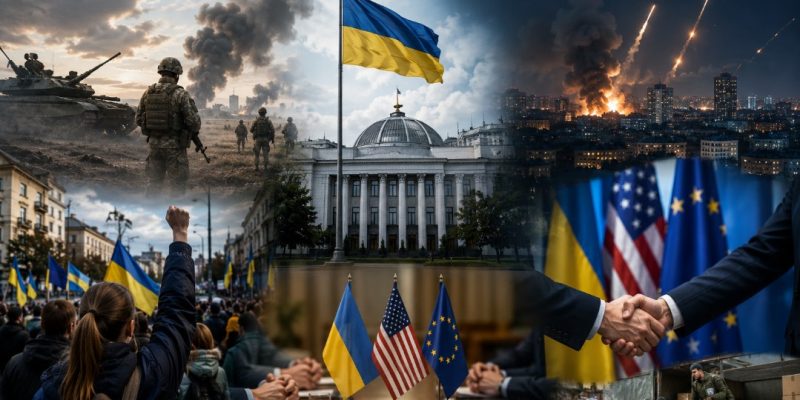
The week of July 19–25 in Ukraine was marked by continued Russian attacks on cities and critical infrastructure, government personnel changes and the public debate surrounding them, protest rallies in several cities, and ongoing international support for Kyiv. On the battlefield, the heaviest fighting remained concentrated in the east, while the Ukrainian government continued diplomatic efforts with partners to secure military assistance and strengthen sanctions against Russia.
Related: Weekly Ukraine Digest (July 12–18, 2026): a brief overview of the week’s main events
Russia Continued Large-Scale Strikes on Ukrainian Cities
Throughout the week, Russian forces repeatedly used missiles, attack drones, and aircraft to strike Ukrainian regions. During the night of July 19, Kyiv, the Kyiv region, Kharkiv, and several other cities came under attack. According to the General Staff of the Armed Forces of Ukraine, nearly 250 combat engagements were recorded in a single day, with the Pokrovsk sector remaining the most intense area of fighting. On July 25, Russian forces struck Sumy, killing civilians, while additional attacks targeted other regions across the country.
Government Reshuffle Triggered Public Debate
One of the week’s key political developments was a cabinet reshuffle. The Verkhovna Rada approved the formation of a new government led by Prime Minister Serhii Koretskyi. At the same time, the dismissal of Defense Minister Mykhailo Fedorov generated significant public discussion and renewed debate over defense policy and future personnel decisions.
Protest Rallies Continued Across Ukrainian Cities
Following the government’s personnel decisions, peaceful demonstrations continued in several Ukrainian cities. Participants called for greater transparency regarding the reasons behind the appointments and dismissals and urged authorities to ensure openness in decision-making. The largest rallies took place in Kyiv, Lviv, Dnipro, Kharkiv, Odesa, and several other regional centers.
Heavy Fighting Persisted in Eastern Ukraine
According to the General Staff, Russian forces maintained strong offensive pressure along the Pokrovsk, Lyman, Sloviansk, and Kupiansk directions. Ukrainian troops reported repelling dozens of attacks each day. At the same time, Ukrainian forces continued strikes against Russian logistics facilities, while air defense units remained active in intercepting missiles and unmanned aerial vehicles.
Ukraine Continued International Consultations
Throughout the week, Ukrainian officials held talks with international partners on continued military, financial, and humanitarian assistance. Discussions focused on the delivery of additional air defense systems, ammunition, financing for Ukraine’s defense industry, and expanding sanctions against Russia. Partner countries reaffirmed their commitment to providing long-term support for Ukraine.
Cultural Initiatives Continued Despite the War
On July 20, Ukraine launched the National Reading Week, organized by the Ukrainian Book Institute. The campaign brought together libraries, publishers, authors, and readers both in Ukraine and abroad, becoming one of the country’s largest cultural events of the week. Organizers stated that this year’s theme focuses on contemporary Ukrainian literature and promoting reading.
Ukraine ends the week facing continued security challenges while maintaining active diplomatic engagement with its international partners. Domestic political developments remain under close public scrutiny, while sustained international assistance continues to play a key role in supporting the country’s resilience.