
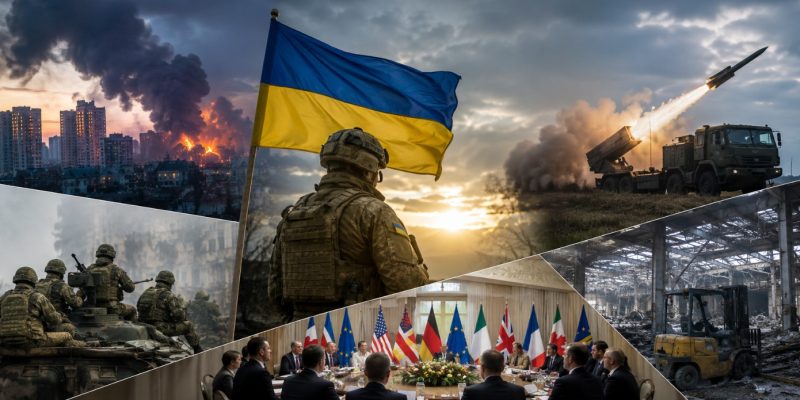
The week of July 12–18 in Ukraine was marked by large-scale Russian missile and drone attacks, government reshuffles, continued heavy fighting on the front line, and new international decisions on support for the country. At the same time, discussions continued over reforms within the executive branch, while the security situation remained one of the central issues on both the domestic and international agenda. The week’s developments demonstrated that military, political, and economic processes remain closely interconnected.
Related: Weekly Ukraine Digest (July 5–11, 2026): a brief look at the week’s top stories
Large-Scale Missile and Drone Attacks Across Ukraine
Throughout the week, Russia continued combined attacks using missiles and unmanned aerial vehicles. The most significant strikes targeted Kyiv and the Odesa region. In the capital, residential buildings, office facilities, transport infrastructure, and industrial sites sustained damage. In the Odesa region, port infrastructure critical to Ukrainian exports was hit. Ukrainian authorities reported on emergency response efforts and damage assessments, while the Russian side stated that military and logistics facilities had been targeted.
Government Reshuffle and Changes in State Institutions
One of the week’s key political developments was a series of personnel changes following the restructuring of the government. The Verkhovna Rada approved the resignation of the Cabinet of Ministers, after which the formation of a new executive team began. At the same time, appointments and changes were announced in several state institutions and law enforcement agencies. Some of these кадрові decisions sparked public debate and protests in several cities.
Heavy Fighting Continues Along the Front Line
According to the General Staff of the Armed Forces of Ukraine, more than 200 combat engagements were recorded daily during the week. The most intense fighting remained concentrated around the Pokrovsk sector, as well as the Kupiansk, Lyman, Toretsk, and Novopavlivka directions. Russian forces continued extensive use of aviation, guided aerial bombs, artillery, and attack drones, while Ukrainian defenders maintained defensive operations against ongoing assaults.
International Support and Diplomatic Engagement
Ukraine continued active consultations with Western partners regarding military, financial, and humanitarian assistance. Government officials held a series of meetings focused on strengthening air defense capabilities, securing additional funding for reconstruction, and expanding sanctions against Russia. Long-term support for Ukraine remained one of the central topics during international diplomatic discussions.
Economy and Logistics Suffer Additional Damage
Russian strikes caused damage to logistics facilities, industrial enterprises, and warehouse infrastructure. Reports indicated the destruction of a major logistics complex in the Kyiv region and damage to several manufacturing facilities. Analysts note that such attacks may further disrupt supply chains, logistics operations, and business activity. Companies are currently assessing losses and preparing recovery plans.
Public Mood and Security Situation
Despite regular air raid alerts and continued attacks, critical infrastructure, public transportation, and government institutions continued operating in most regions. Authorities repeatedly urged residents to respond promptly to air raid warnings, while emergency services worked to eliminate the consequences of the strikes. Security remains the dominant factor affecting daily life across the country.
The events of the week indicate that security, government restructuring, and international support continue to dominate Ukraine’s agenda. The coming week may bring further political decisions, military developments, and diplomatic initiatives.