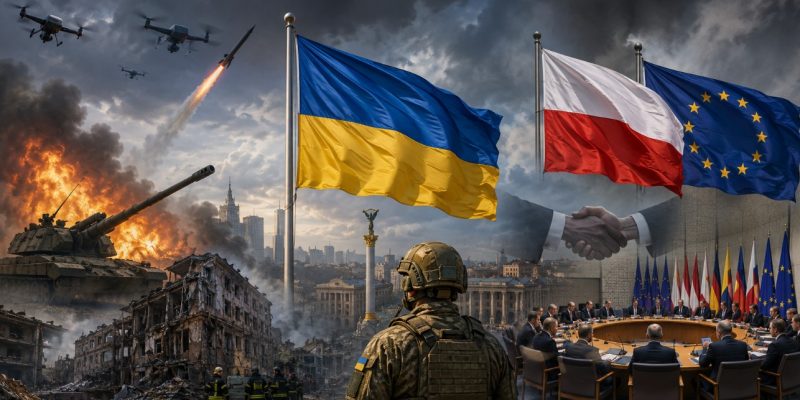
The final week of June and the beginning of July in Ukraine were marked by intense fighting, new Russian aerial attacks, active diplomatic efforts by Kyiv, and continued negotiations on the country’s integration into the European Union. At the same time, the Ukrainian government focused on expanding international military assistance, while the front line remained highly active. Another major foreign policy topic of the week was the discussion between Ukraine and Poland over historical memory, which also affected Ukraine’s EU accession process.
Related: Weekly Ukraine Digest (June 21–27, 2026): key developments of the week
Constitution Day Marked by New Attacks
On June 28, Ukraine celebrated Constitution Day amid the ongoing full-scale war. On the same day, Russian forces launched coordinated attacks on several regions using ballistic missiles and attack drones. Kyiv, Kharkiv, Zaporizhzhia, and other cities came under fire. According to the General Staff of the Armed Forces of Ukraine and the Air Force, more than 200 combat engagements were taking place simultaneously along the front line, while Ukrainian air defenses continued to repel large-scale aerial attacks.
Russia Continued Massive Strikes on Ukrainian Cities
Throughout the week, Russian forces repeatedly attacked Ukrainian cities and towns with missiles, guided aerial bombs, and drones. One of the most significant incidents occurred on July 4, when a strike on central Sumy killed civilians, injured dozens of people, and damaged residential buildings and civilian infrastructure. Ukrainian officials once again called on international partners to accelerate deliveries of modern air defense systems, while international organizations condemned the attacks on civilian targets.
Ukraine Intensified Diplomatic Engagement with Allies
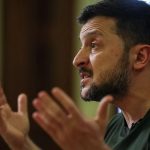
President Volodymyr Zelensky summarized Ukraine’s diplomatic achievements for June. Key outcomes included new agreements to strengthen Ukraine’s air defense capabilities, expand military-technical cooperation, increase funding for the domestic defense industry, and develop joint weapons production projects with partner countries. Particular attention was also given to the implementation of the international Drone Deal initiative and support for Ukrainian drone manufacturers.
EU Accession Talks Entered a New Phase
One of the week’s major foreign policy developments was the continuation of negotiations on Ukraine’s accession to the European Union. Following the opening of the first negotiation cluster, Ukrainian officials stated that the country was ready to move on to additional chapters once the required reforms had been completed. The European Commission continues to assess Ukraine’s progress in the areas of rule of law, anti-corruption measures, judicial reform, and public administration.
Ukraine and Poland Discussed Historical Disputes
Toward the end of the week, attention shifted to Ukrainian-Polish relations amid discussions surrounding Ukraine’s European integration. Polish Defense Minister Władysław Kosiniak-Kamysz stated that Warsaw would not support further progress in Ukraine’s EU accession negotiations unless historical issues related to the Volhynia tragedy, the activities of the OUN and UPA, and the exhumation of victims were addressed. Similar statements were made by representatives of Poland’s opposition, who called for linking further negotiations more closely to the resolution of historical disputes.
The Ukrainian government emphasized its readiness to continue dialogue with Poland on difficult chapters of their shared history and to seek mutually acceptable solutions. Despite the political disagreements, both Kyiv and Warsaw reaffirmed the importance of their strategic partnership in security, defense, and support for Ukraine during the war. Official negotiations on Ukraine’s EU membership continue, and both sides have expressed their intention to maintain constructive cooperation.
The Situation on the Front Remained Tense
According to the General Staff of the Armed Forces of Ukraine, the heaviest fighting during the week took place in the Pokrovsk, Lyman, Novopavlivka, Toretsk, and Kupiansk sectors. More than 200 combat engagements were reported daily. Ukrainian forces stated they continued to contain Russian offensive operations, while Russian troops maintained extensive use of artillery, aviation, missiles, and attack drones.
International Support for Ukraine Remained a Key Factor
Throughout the week, representatives of the European Union, the United States, the United Kingdom, Canada, and other partner countries reaffirmed their commitment to providing continued military, financial, and humanitarian assistance to Ukraine. Discussions focused on supplying additional air defense systems, ammunition, expanding joint weapons production, financing Ukraine’s defense sector, and supporting the country’s economy during wartime.
Summarizing the week, the key issues remained the security situation, international support, Ukraine’s EU accession negotiations, and diplomatic engagement with strategic partners. At the same time, the intensity of combat operations, Russian attacks, and political discussions surrounding European integration demonstrated that tensions remain high both on the battlefield and in the international arena.