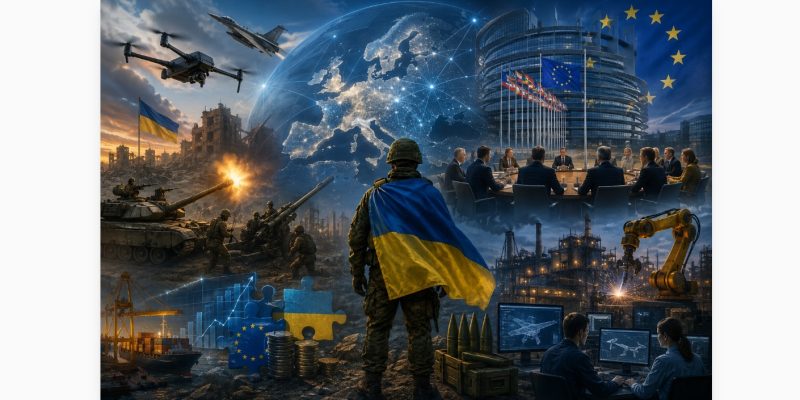
The past week has once again placed Ukraine at the center of international attention. Military developments, new sanctions against Russia, growing drone warfare capabilities, and ongoing diplomatic efforts highlighted how the conflict is evolving beyond traditional battlefield operations.
While active fighting continues along the front line, the war is increasingly being shaped by technology, industrial production, economic pressure, and international alliances.
Zelensky Warns of a New Russian Offensive
One of the week’s most significant developments came from Ukrainian President Volodymyr Zelensky, who stated that Ukrainian intelligence services have detected signs of preparations for a new large-scale Russian offensive.
According to Zelensky, Moscow continues to mobilize resources and strengthen military capabilities despite ongoing losses and international sanctions. The Ukrainian president emphasized the importance of continued military assistance from Western allies, particularly air defense systems and ammunition supplies.
His remarks came amid intensified Russian attacks across multiple regions of Ukraine and renewed concerns about Moscow’s strategic objectives for the coming months.
For Kyiv, the warning serves both as a military assessment and a diplomatic message aimed at maintaining international support.
Ukraine Aligns New Sanctions with the European Union
Another major development was Ukraine’s decision to synchronize new sanctions packages with the latest restrictions adopted by the European Union.
The measures target individuals and organizations connected to Russia’s defense sector, military-industrial complex, and entities involved in supporting the war effort.
Ukrainian officials argue that coordinated sanctions are essential to closing loopholes that allow restricted goods and technologies to reach Russia through third countries.
Particular attention has been given to companies involved in supplying dual-use technologies, electronic components, and industrial equipment that can support weapons production.
The move reflects Kyiv’s broader strategy of increasing economic pressure on Moscow while deepening integration with European institutions.
The Drone War Reaches a New Stage
Drone warfare continued to dominate military headlines throughout the week.
Ukraine reportedly carried out a series of long-range drone strikes targeting infrastructure linked to Russia’s military and energy sectors. Oil storage facilities, logistics hubs, and other strategic assets have increasingly become targets of Ukrainian operations designed to disrupt Russia’s war machine.
At the same time, Russia launched additional waves of drone and missile attacks against Ukrainian territory.
Military analysts note that drones have become one of the most important tools of modern warfare. Compared with traditional missiles, unmanned systems are significantly cheaper and can be produced at scale, making them particularly effective in a prolonged conflict.
The growing importance of drone technology is also driving investment and innovation within Ukraine’s domestic defense industry.
Russian Attacks Continue Across Ukraine
Throughout the week, Russian forces continued aerial attacks against Ukrainian cities and infrastructure.
Regional authorities reported damage to residential buildings, energy facilities, and transportation infrastructure in several parts of the country.
Ukraine’s air defense network intercepted many incoming threats, but some attacks resulted in casualties and property damage.
The ongoing strikes have reinforced Kyiv’s calls for additional Western air defense systems and have highlighted the continuing vulnerability of civilian infrastructure.
For many Ukrainians, the attacks serve as a reminder that despite discussions about diplomacy and negotiations, the war remains an everyday reality.
Zaporizhzhia Nuclear Plant Remains a Security Concern
The Zaporizhzhia Nuclear Power Plant, Europe’s largest nuclear facility, once again became the focus of international attention.
Russian state nuclear corporation Rosatom reported damage to infrastructure associated with the facility, while Ukrainian officials rejected Moscow’s claims and called for independent verification.
The International Atomic Energy Agency (IAEA) continues to monitor the situation and regularly stresses the importance of maintaining nuclear safety standards amid ongoing military activity.
The plant remains one of the most sensitive issues in the conflict due to the potential consequences any major incident could have for Ukraine and the wider European region.
Europe Debates the Future of Support for Ukraine
European governments continued discussions on the future of military, economic, and political support for Ukraine.
Key topics included defense funding, sanctions policy, long-term security guarantees, and the future role of Ukraine within European institutions.
The debate reflects a broader shift in European strategic thinking. Many policymakers increasingly view support for Ukraine not only as assistance to a partner country but also as an investment in the long-term security architecture of Europe.
The outcome of these discussions is likely to influence both Ukraine’s resilience and Europe’s broader geopolitical position in the years ahead.
What It Means
The most important takeaway from the week is that the war is becoming increasingly multidimensional.
Military operations remain central, but sanctions, industrial capacity, technological innovation, and international diplomacy are playing an ever larger role in shaping outcomes.
Ukraine continues to strengthen its defense capabilities while relying on support from allies to maintain economic stability and military effectiveness.
For international audiences, developments in Ukraine are no longer solely a regional issue. They affect European security, energy markets, global supply chains, defense spending, and international politics.
As a result, Ukraine remains one of the most closely watched geopolitical stories in the world.