The week’s main developments included large-scale Russian strikes on Ukrainian cities and energy infrastructure, intensified diplomatic contacts involving the United States and European countries, and the European Union’s allocation of a record €7.9 billion tranche to Ukraine. At the same time, Ukraine carried out a large-scale drone attack on Russian territory, while Kyiv continued discussions on the terms of a possible end to the war.
Related: Weekly Digest of Events in Ukraine (November 8–14, 2026): key developments at a glance
Massive Attack on Kyiv and Other Regions
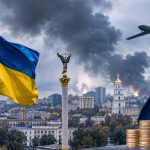
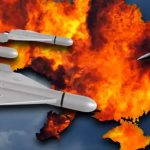
On the night of November 20, Russia launched one of the largest combined attacks since the start of its full-scale invasion. According to the Ukrainian Air Force, Russian forces fired 84 cruise missiles and 404 attack drones of various types from the evening of November 19. Ukrainian air defences destroyed or suppressed 372 aerial targets.
Seven people were killed and at least 17 injured in Kyiv. Three bridges — the Darnytskyi Bridge, the Pivdennyi (Southern) Bridge and the Podilsko-Voskresenskyi Bridge crossing — as well as a critical infrastructure facility were damaged. Power outages were reported in five districts of the capital. The attacks also affected nine other regions, including Kyiv, Kharkiv, Lviv, Odesa and Vinnytsia regions.
Buildings housing diplomatic missions of European countries were also damaged. The European Union announced that it intended to summon a Russian representative to seek explanations over the impact of the attack on foreign missions in Kyiv. Strikes on energy infrastructure increased the risk of power disruptions at the beginning of the heating season.
Strike on Kryvyi Rih: Two Killed, Dozens Injured
On the evening of November 20 and during the night of November 21, Russian missiles and drones attacked Kryvyi Rih in the Dnipropetrovsk region. A seven-year-old boy and a 20-year-old emergency medical services worker were killed. According to local authorities, around 60 people were injured, including six children.
About 25 apartment buildings, a hospital, schools, businesses and other facilities were damaged. Ukrainian officials said that follow-up strikes hit the area where rescue operations were underway. During the night of November 21, Russia also launched three ballistic missiles and 148 drones at Ukraine. The Ukrainian military reported that 117 drones had been destroyed or suppressed, while impacts were recorded at 19 locations.
Ukraine Carries Out Its Largest Drone Attack on Russia
On November 16, Russia said it had intercepted 1,336 Ukrainian drones over 16 regions of the country. The Russian Defence Ministry described the incident as the largest overnight attack of its kind since the beginning of the full-scale invasion. Moscow reported intercepting 191 drones heading towards the capital region.
According to Russian regional authorities, several industrial facilities were damaged, including businesses in the Rostov region and a site near an oil refinery in Krasnodar Krai. Reports also indicated a temporary suspension of road traffic on the bridge connecting Crimea with Krasnodar Krai. Independent verification of the full extent of the reported damage remains difficult.
Reuters reported that Ukrainian attacks on Russia’s oil refining infrastructure had intensified. According to industry sources, Russian oil refining volumes had fallen by around 30%, while Volodymyr Zelensky said that more than half of the country’s refining capacity had been put out of operation. These estimates differ and do not mean that all affected facilities have completely ceased operations.
Talks on Ending the War Continue in Berlin
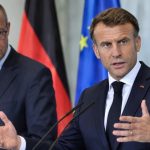
On November 19, talks took place in Berlin involving Ukrainian President Volodymyr Zelensky, US representatives Steve Witkoff and Jared Kushner, as well as European leaders and diplomats. The meetings formed part of the Donald Trump administration’s efforts to prepare for a new phase of negotiations aimed at ending the war.
According to the US side, discussions focused on security guarantees for Ukraine following a possible agreement, an economic recovery plan and preparations for further multilateral contacts. Earlier, representatives of the United States, Ukraine and Russia had held talks in Abu Dhabi, while Witkoff and Kushner had met with Vladimir Putin in Moscow.
Territorial demands remain the main obstacle. Russia is insisting that the entire Donbas region be transferred to its control, while Kyiv rejects giving up Ukrainian territory. Zelensky also expressed doubts that Washington and Kyiv share the same understanding of security guarantees based on the NATO model. No agreed document setting out the terms of a ceasefire has been announced.
EU Transfers Record €7.9 Billion to Ukraine
On November 20, the European Commission transferred €7.859 billion to Ukraine as part of the ninth regular payment under the Ukraine Facility programme. This is the largest single tranche the European Union has provided through this mechanism. Following the payment, total funding received by Kyiv under the Ukraine Plan since mid-2024 reached €40 billion.
According to the European Commission, the decision to release the funds followed an assessment of Ukraine’s implementation of more than 20 reform and investment targets. These covered the judicial system, efforts to combat corruption and money laundering, management of state assets, energy, digitalisation and other areas. The funds are intended to meet budgetary needs, maintain the operation of state institutions and support reforms.
Ukraine has a further €15.7 billion in EU assistance available by the end of 2026, subject to the fulfilment of agreed conditions. Of this amount, €10.2 billion is earmarked for strengthening defence-industrial capacity, while another €3.9 billion is allocated for budget support. European Commission President Ursula von der Leyen said that further payments would depend on continued progress with reforms.
Conclusion
The week saw military pressure intensify alongside increased diplomatic activity surrounding the war. Ukraine received substantial financial support from the EU and continued discussions with its partners on security guarantees. However, territorial disagreements with Russia remain unresolved, and no agreed terms for ending the fighting have emerged.