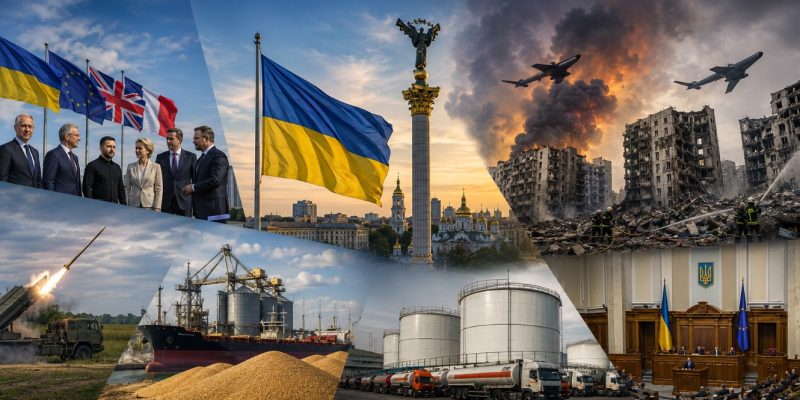
The week of August 23–29, 2026, was marked by the 35th anniversary of Ukraine’s independence, intensified Russian air attacks, and increased diplomatic contacts with Western partners. Representatives of European countries confirmed continued military support for Kyiv, while Russian strikes affected residential areas and logistics infrastructure. The economic situation was also influenced by difficulties with grain exports through the Danube, while Ukrainian long-range strikes became one of the factors contributing to a renewed gasoline shortage in Russia.
Related: Weekly Digest of Events in Ukraine (August 16–22, 2026): a brief overview
35th Anniversary of Independence and New Commitments from Partners
On August 24, Ukraine marked the 35th anniversary of the restoration of its independence. Foreign leaders and representatives of partner countries arrived in Kyiv, while one of the key international events was a meeting of the “Coalition of the Willing,” bringing together more than 20 countries.
The United Kingdom and France announced expanded support for Ukrainian production of long-range missiles. London said it was ready to provide access to classified technologies required to manufacture Storm Shadow components, while France had previously approved the transfer of similar technologies for SCALP missiles. President Volodymyr Zelenskyy also said Ukraine needed additional air defense capabilities, including Patriot interceptor missiles. More than 50 countries supported a joint call for an immediate and unconditional ceasefire.
Russian Attacks Increased Pressure on Kyiv and Logistics
During the second half of the week, Russia intensified drone and missile strikes on Kyiv and other regions. On the night of August 27, damage was reported in four districts of the capital: Desnianskyi, Obolonskyi, Podilskyi, and Shevchenkivskyi. Residential buildings, vehicles, a secondary school, and a medical facility were damaged.
By the end of the week, attacks had also affected the Kyiv region, damaging apartment buildings, warehouses, transport facilities, and infrastructure. According to Associated Press, one person was killed and at least two others were injured. Russian strikes continued to affect civilian infrastructure in other parts of the country as well.
Food logistics became a separate concern. Agriculture Minister Taras Vysotskyi told Reuters that about 90% of retail food logistics infrastructure had been damaged by attacks. Facilities belonging to major retail chains, Nova Poshta sorting centers, and warehouses were affected. Temporary shortages of fresh food, milk, and sugar were reported in some parts of Kyiv, although authorities did not indicate a risk of a broader food shortage.
Kyiv Expects New Technical Talks on the War
On August 28, Ukrainian presidential adviser Kyrylo Budanov said that technical negotiations related to Russia’s war against Ukraine could begin in the near future. According to him, the discussions were not yet expected to produce a rapid political settlement but would focus on preparatory and technical work.
One of the main obstacles remains the issue of territory. Russia continues to demand the withdrawal of Ukrainian forces from areas of Donbas controlled by Kyiv, while the Ukrainian government rejects the transfer of territory currently under its control. Budanov also said he did not expect the war to end before winter.
On the same day, Zelenskyy said the United States had provided Kyiv with information about several recent meetings in Moscow. Details of those contacts were not publicly disclosed. The statements came amid continuing consultations between Washington, Kyiv, and European capitals on possible diplomatic formats.
Grain Exports Faced Restrictions on the Danube
One of the main economic developments of the week was the disruption of Ukrainian grain exports. According to traders and analysts, up to 70 vessels were waiting to pass through the Sulina Canal on the Danube as of August 25.
The main reasons included a shortage of pilots, priority access for other cargoes, and air raid alerts that periodically halted port operations. Only two or three vessels were able to pass through the canal per day. From August 1 to 21, exports through Danube ports totaled 539,000 tonnes, compared with 1.73 million tonnes during the same period in 2025. The delays increased costs for carriers and added pressure to Ukraine’s export sector.
Ukrainian Strikes on Refineries Affected Russia’s Fuel Market
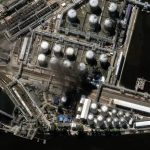
By the end of August, the consequences of Ukrainian attacks on Russian oil refineries had become visible on Russia’s domestic fuel market. According to Reuters, gasoline production had fallen to about 70% of domestic demand.
Sources told the agency that major facilities in the Perm region and the Nizhny Novgorod and Yaroslavl regions had temporarily halted operations or experienced disruptions. Daily production was estimated at about 80,000 tonnes, compared with summer demand of approximately 115,000 tonnes. Russia increased fuel imports and maintained its ban on gasoline exports, while restrictions on fuel sales reappeared in several regions.
Parliamentary Committees Supported the Government’s Program
In domestic politics, one of the notable developments was the progress of the Cabinet of Ministers’ action program. On August 26, the Verkhovna Rada Committee on Economic Development unanimously supported the government document and recommended that parliament approve it.
Prime Minister Serhii Koretskyi said the program included specific targets, implementation deadlines, and officials responsible for carrying out the planned measures. The next stage is expected to be consideration of the document by the Verkhovna Rada during a plenary session.
Weekly summary. The main factors of the period were the simultaneous intensification of military activity and the continuation of diplomatic contacts. Ukraine ended the week with new statements of support from Western partners, while risks to energy, logistics, and export infrastructure remained elevated ahead of the autumn and winter period.