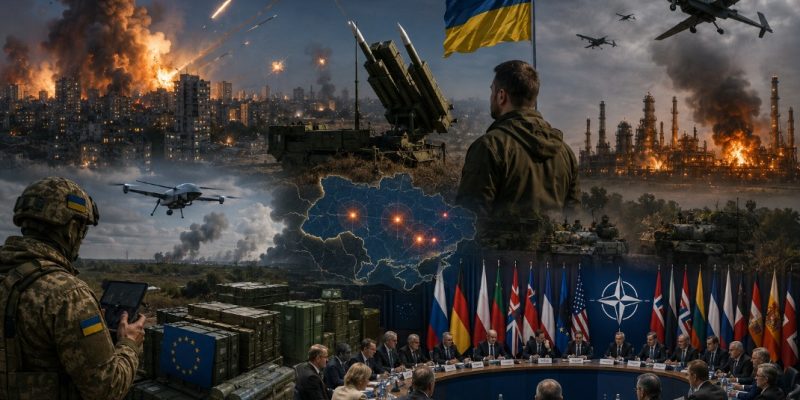
The week of June 2–8 was marked by large-scale Russian attacks on Ukrainian cities, discussions of new international assistance packages, and the continued expansion of drone warfare on both sides of the conflict. Air defense remained one of Kyiv’s top priorities as officials warned of the possibility of further mass strikes. International partners continued negotiations on long-term military and financial support for Ukraine, while preparations intensified ahead of NATO’s upcoming summit.
Russia Launches One of the Largest Air Attacks of the Year
During the early hours of June 2, Russia carried out one of its largest combined missile and drone attacks in recent months. Ukrainian authorities reported that more than 70 missiles and approximately 650 drones were launched against targets across the country. Kyiv, Dnipro, Kharkiv, Sumy, and Zaporizhzhia were among the cities affected. The attacks caused civilian casualties, damaged residential buildings, and disrupted infrastructure. Ukrainian air defense forces reported intercepting a significant number of incoming targets, although some missiles penetrated defensive systems and struck their intended objectives.
Zelensky Warns of Additional Large-Scale Strikes
President Volodymyr Zelensky stated that Ukrainian intelligence services had detected signs of further preparations for major Russian attacks. According to the president, Ukraine continues to face shortages of advanced air defense systems capable of intercepting ballistic missiles. Kyiv intensified discussions with allies regarding additional deliveries of air defense equipment, interceptor missiles, and intelligence support. The issue remained central to Ukraine’s diplomatic agenda throughout the week.
NATO Discusses €70 Billion Support Package
NATO member states began discussing a new long-term assistance initiative for Ukraine worth approximately €70 billion. According to media reports, the proposal was developed by Germany and includes a new framework designed to improve transparency and coordination of military aid. The initiative is expected to be formally presented during the NATO summit in Ankara next month. Discussions emerged amid concerns among several alliance members that the burden of supporting Ukraine has been distributed unevenly.
Ukraine Continues Deep-Strike Drone Operations
Ukrainian drone attacks against military and energy-related facilities inside Russia continued throughout the week. One of the most notable reported targets was the Ilsky oil refinery in Russia’s Krasnodar region. Analysts say such operations have become an increasingly important component of Ukraine’s strategy to disrupt Russian logistics, fuel supplies, and military infrastructure. Both sides have significantly expanded the use of long-range drones over the past year.
Heavy Fighting Persists Along the Front Line
Intense combat operations continued in eastern Ukraine, particularly in the Donetsk region. Military observers reported no major territorial changes during the week, although both sides maintained a high operational tempo. Drone warfare, precision-guided weapons, and electronic warfare systems remained central elements of battlefield operations. Defense analysts noted that unmanned systems are playing an increasingly decisive role in shaping modern military engagements.
International Support Remains a Key Focus
Amid ongoing attacks, Ukrainian officials expanded diplomatic efforts with European partners and the United States. Discussions focused on strengthening air defenses, securing additional funding for reconstruction projects, and developing long-term security arrangements. Preparations for upcoming NATO and European Union meetings also intensified, with Ukraine expected to remain one of the central topics on the international agenda.
The week highlighted both the continued escalation of aerial warfare and Ukraine’s dependence on sustained international support. At the same time, Western governments advanced discussions on long-term funding and military assistance mechanisms. Decisions expected at upcoming NATO meetings may significantly influence the next phase of international support for Ukraine.