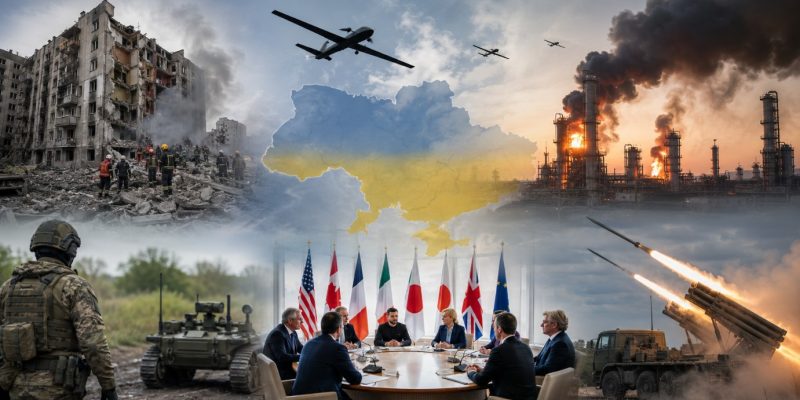
The week of June 14–20, 2026, was marked by continued large-scale Russian attacks across Ukraine, intensified diplomatic efforts on the international stage, new Ukrainian strikes on Russian military and energy infrastructure, and further expansion of the country’s defense technology sector. At the same time, Kyiv continued negotiations with its partners on military assistance and long-term security guarantees, while the situation along the front line remained tense.
Related: Weekly Ukraine Digest (June 7–13, 2026): Allied talks, new attacks, and prisoner exchanges
Russia Continued Large-Scale Attacks on Ukrainian Cities
Throughout the week, Russia carried out combined attacks using drones, guided aerial bombs, and missiles. Kharkiv remained one of the hardest-hit cities. On June 20, a guided bomb struck a residential building, killing at least one person and injuring nine others, including a six-year-old child. According to Ukrainian officials, air defense forces intercepted 92 of 99 attack drones during one of the overnight assaults, although some projectiles still reached civilian infrastructure.
Ukraine Expanded Strikes on Russian Fuel Infrastructure
Ukrainian long-range drones launched additional strikes on Russian oil refining facilities during the week. According to international reports, one of Russia’s largest oil refineries near Moscow was targeted again. The sustained campaign against Russian energy infrastructure has already affected fuel supplies in several regions, prompting Russian authorities to introduce additional measures aimed at stabilizing the domestic fuel market.
Zelensky Held Diplomatic Talks During the G7 Summit
President Volodymyr Zelensky participated in events surrounding the G7 Summit, where he held a series of bilateral meetings with international leaders. One of the central topics was the coordination of diplomatic efforts aimed at ending the war. Ukraine also expressed support for Brazilian President Luiz Inácio Lula da Silva’s proposal to strengthen an international diplomatic framework involving the permanent members of the UN Security Council. Ukrainian officials reiterated that any future negotiations must be based on the principles of territorial integrity and international law.
Kyiv Increased Pressure Over Belarus’ Role in the War
On June 20, President Zelensky called on Belarus to stop allowing its territory to be used in support of Russian military operations. He urged Minsk to dismantle equipment that Ukrainian authorities say is being used to facilitate Russian strikes against Ukraine. The statement came amid the continued presence of Russian military forces in Belarus and ongoing defense cooperation between Moscow and Minsk.
Ukraine Expanded Production of Ground Robotic Systems
Ukraine’s defense industry continued increasing production of unmanned ground vehicles. According to industry officials, the government signed contracts for approximately 25,000 robotic ground systems during the first half of 2026 and plans to increase that number to 50,000 by the end of the year. These platforms are used for casualty evacuation, ammunition delivery, mine-laying operations, logistics, and combat missions while reducing risks for military personnel. More than 280 Ukrainian companies are currently producing over 550 different models of unmanned ground systems.
Parliament Focused on Committee Work
The period from June 14 to June 20 fell during a non-plenary week for Ukraine’s Verkhovna Rada. Members of Parliament worked within parliamentary committees, political factions, and their constituencies. Meanwhile, the government and parliamentary committees continued preparing legislation related to national security, economic policy, and Ukraine’s European integration agenda.
Ukraine concluded the week amid sustained military pressure and active diplomatic engagement with international partners. At the same time, continued investment in defense technology and ongoing international support remain among the key factors expected to shape developments in the coming months.