The week of June 7–13 was marked by continued diplomatic engagement between Ukraine and its European partners, new Russian attacks on infrastructure facilities, and discussions on further support for Kyiv. Security issues, prisoner exchanges, developments on the battlefield, and international assistance remained at the center of attention. Several decisions and statements made during the week could influence both the course of the war and Ukraine’s cooperation with its allies.
Related: Ukraine Weekly Digest (June 1–6, 2026): Russian strikes, NATO aid and drone warfare
Zelensky Holds Talks with Leaders of the United Kingdom, France, and Germany
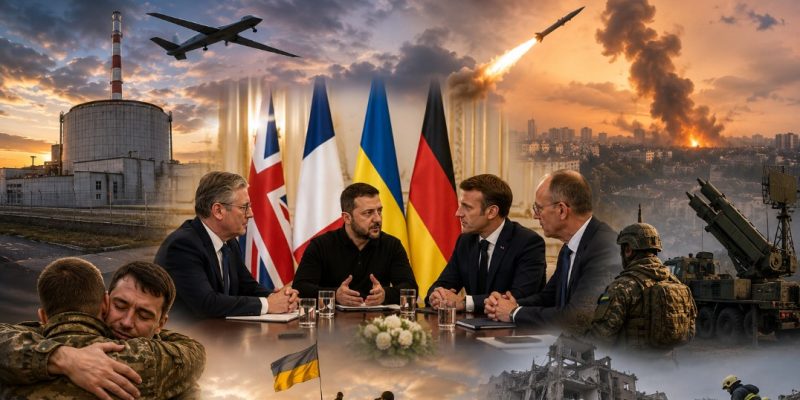
On June 7, President Volodymyr Zelensky met in London with UK Prime Minister Keir Starmer, French President Emmanuel Macron, and German Chancellor Friedrich Merz. The leaders reaffirmed their support for Ukraine and discussed additional measures to strengthen the country’s defense capabilities, as well as prospects for diplomatic efforts aimed at ending the war. Following the meeting, the parties stated their intention to continue coordinating actions on security and sanctions policy.
Russia Strikes Nuclear Infrastructure Facility
One of the most discussed events of the week was a drone strike on the receiving facility of the Centralized Spent Nuclear Fuel Storage Facility in the Kyiv region. Ukrainian authorities reported partial damage to the site. According to official statements, radiation levels remained within normal limits, but the incident raised concerns among international partners regarding potential risks to regional nuclear safety.
Prisoner Exchanges Between Ukraine and Russia Continue
Ukraine continued efforts to secure the return of its citizens from Russian captivity throughout the week. Those released included both military personnel and civilians. Authorities stated that negotiations on further exchanges are ongoing with the involvement of international mediators. The issue of prisoner releases remains one of the key humanitarian priorities of Ukrainian diplomacy.
Authorities Discuss Improvements to the Mobilization System
Debate over the work of territorial recruitment centers and Ukraine’s mobilization policy continued during the week. The military ombudsman stated that some mobilization cases require additional review and highlighted the need to improve procedures related to deferments and military registration. Authorities say further reforms are being prepared to increase transparency and efficiency within the system.
New Waves of Drone and Missile Attacks
Russian forces continued launching attacks on multiple regions across Ukraine. The Sumy, Kharkiv, Dnipropetrovsk, Zaporizhzhia, Kherson, and Odesa regions were among those targeted. Ukrainian air defense forces regularly reported intercepting aerial threats, although infrastructure facilities and residential buildings sustained damage in several areas. Local authorities continued emergency response and recovery efforts.
International Support for Ukraine Remains a Key Focus
European partners reiterated their readiness to continue providing financial, military, and political support to Ukraine. Discussions at various levels focused on weapons deliveries, the development of Ukraine’s defense industry, and additional sanctions pressure on Russia. Kyiv expects that decisions taken during the summer will help strengthen the country’s defense capabilities in the second half of the year.
Severe Weather Impacts Several Regions
In addition to military and political developments, adverse weather conditions attracted public attention during the week. Several regions experienced heavy rain, thunderstorms, hail, and strong winds. Meteorologists warned about the risk of localized flooding and infrastructure damage. Regional authorities reported that emergency services were working to address the consequences of the severe weather.
Weekly Outlook
The past week demonstrated that both military activity and diplomatic engagement surrounding Ukraine remain intense. At the same time, Kyiv continues to deepen cooperation with its European allies while seeking the return of its citizens from captivity. Security, international assistance, and battlefield developments are expected to remain the dominant issues in the weeks ahead.